By Christian Alvarez, Senior GTM & Partner Ecosystem Consultant
GSIs are expanding their roles across the entire transformation lifecycle, from shaping strategy and designing solutions to integrating technology and supporting ongoing operations.
Several factors are driving this change. Customers are changing how they buy, consume, and pay for technology. GSIs are adapting their business models and go-to-market motions to meet those needs. Artificial intelligence is also expanding what these organizations can deliver.
As a result, GSIs may operate as systems integrators in one engagement, managed service providers in another, and value-added resellers in a different transaction. This creates new opportunities for technology companies, along with pressure on existing partner ecosystems to rethink how these relationships work.
For original equipment manufacturers (OEMs) and other technology companies, the question is how to build GSI relationships that deliver meaningful customer outcomes while creating a credible business case for both organizations.
Here are ten strategies for GSI Partnerships I would put at the center of that discussion.
1. Start with a specific customer opportunity
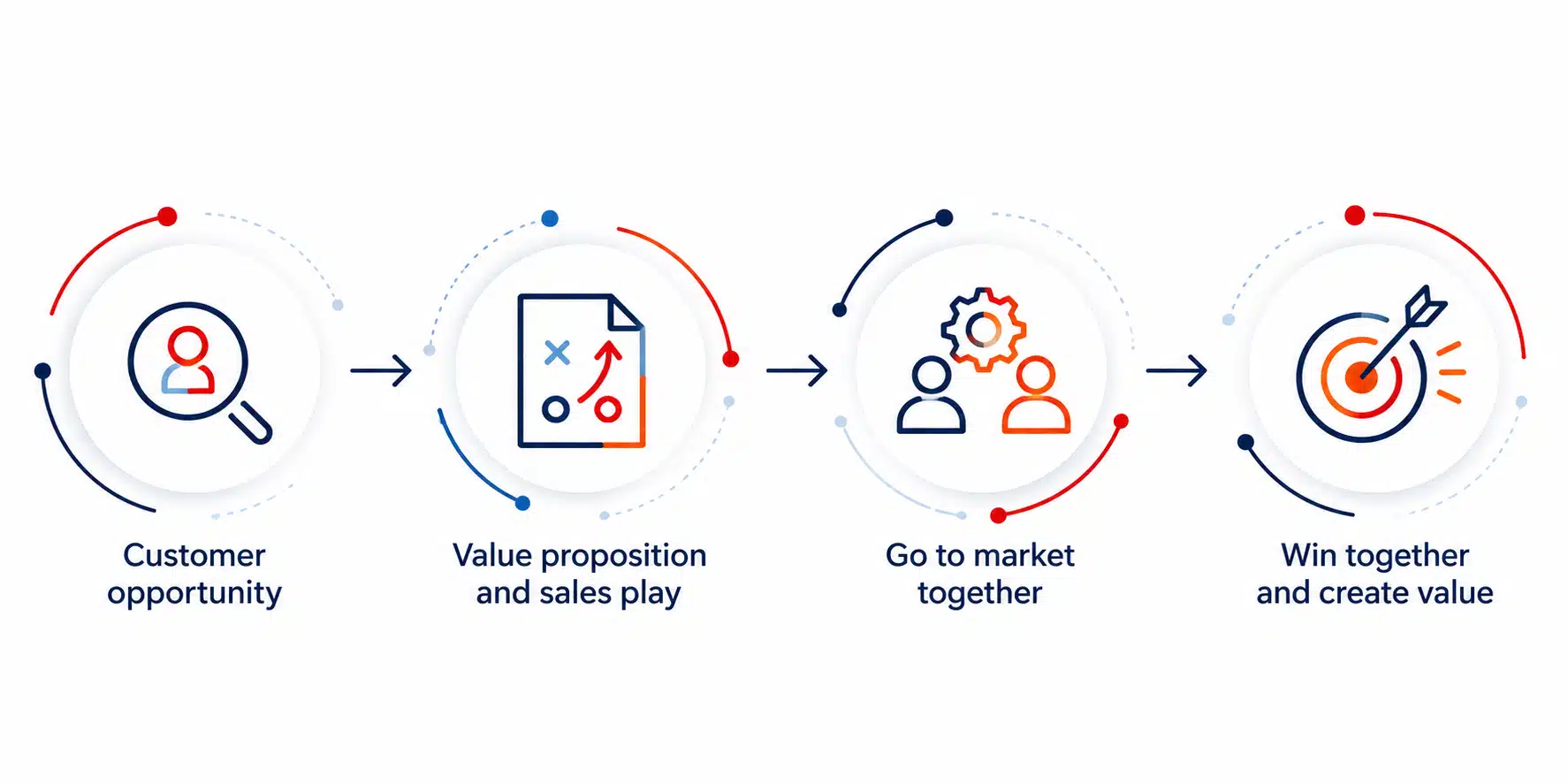
A strong GSI strategy begins with a clear understanding of the customer opportunity and a credible business case for both organizations.
What is the value proposition? What is the sales play? How will the two organizations go to market together and win together?
These questions establish the foundation for the relationship. Technology companies need to understand what the GSI gains from participating, how the combined solution addresses the customer’s needs, and how both organizations benefit commercially.
The economics matter, but they need to support a clearly defined opportunity. Without that foundation, it becomes difficult to align the organizations around a shared objective.
2. Build two connected value propositions
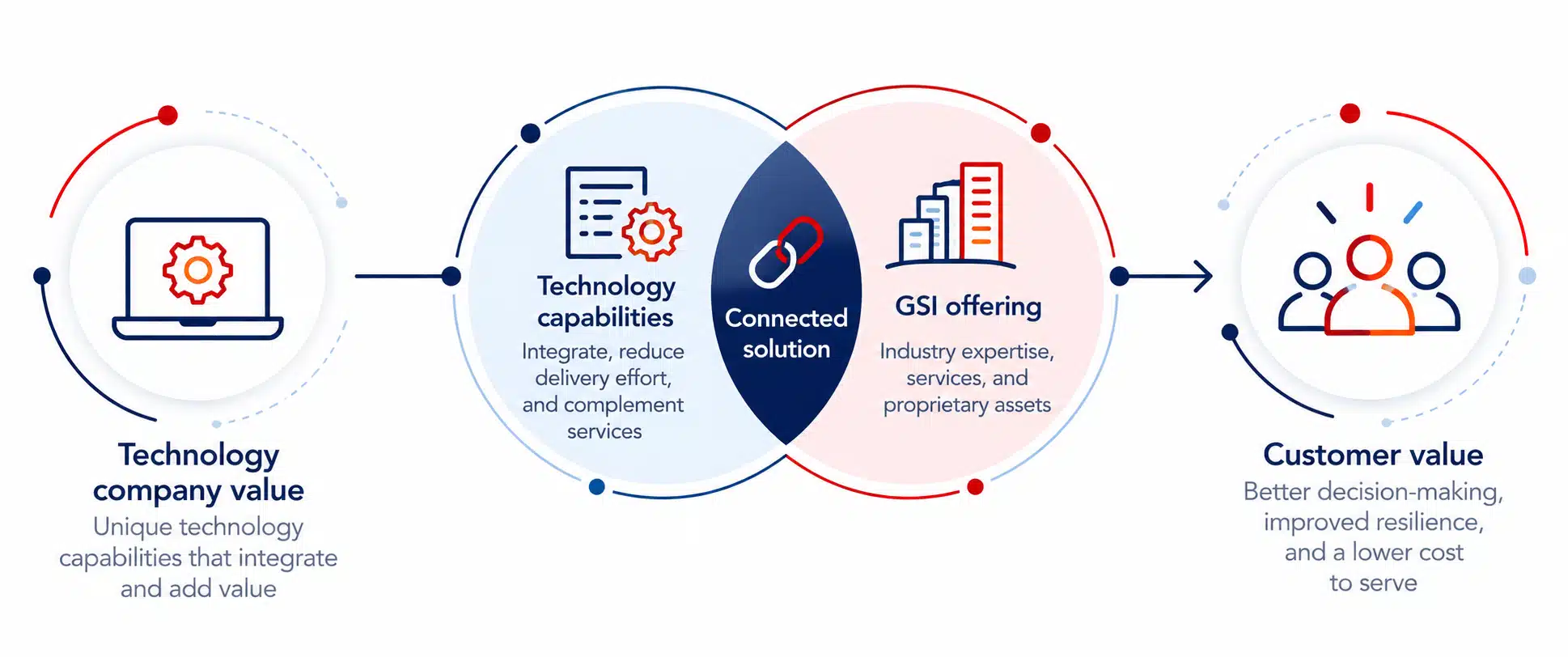
When a GSI delivers a broader customer solution, the technology company’s value proposition needs to connect to the overall solution.
There are two questions to answer: What value does the technology create for the customer, and how does it strengthen the GSI’s offering?
The customer should be able to understand the benefits of the technology, including better decision-making, improved resilience, and a lower cost to serve. At the same time, the technology company needs to demonstrate its distinct contribution to the solution.
That includes explaining how the technology integrates with existing architectures, reduces delivery effort and operational risk, and complements the GSI’s industry expertise, services, and proprietary assets.
Both value propositions need to be clear, concise, and connected.
3. Make enablement a core part of the strategy
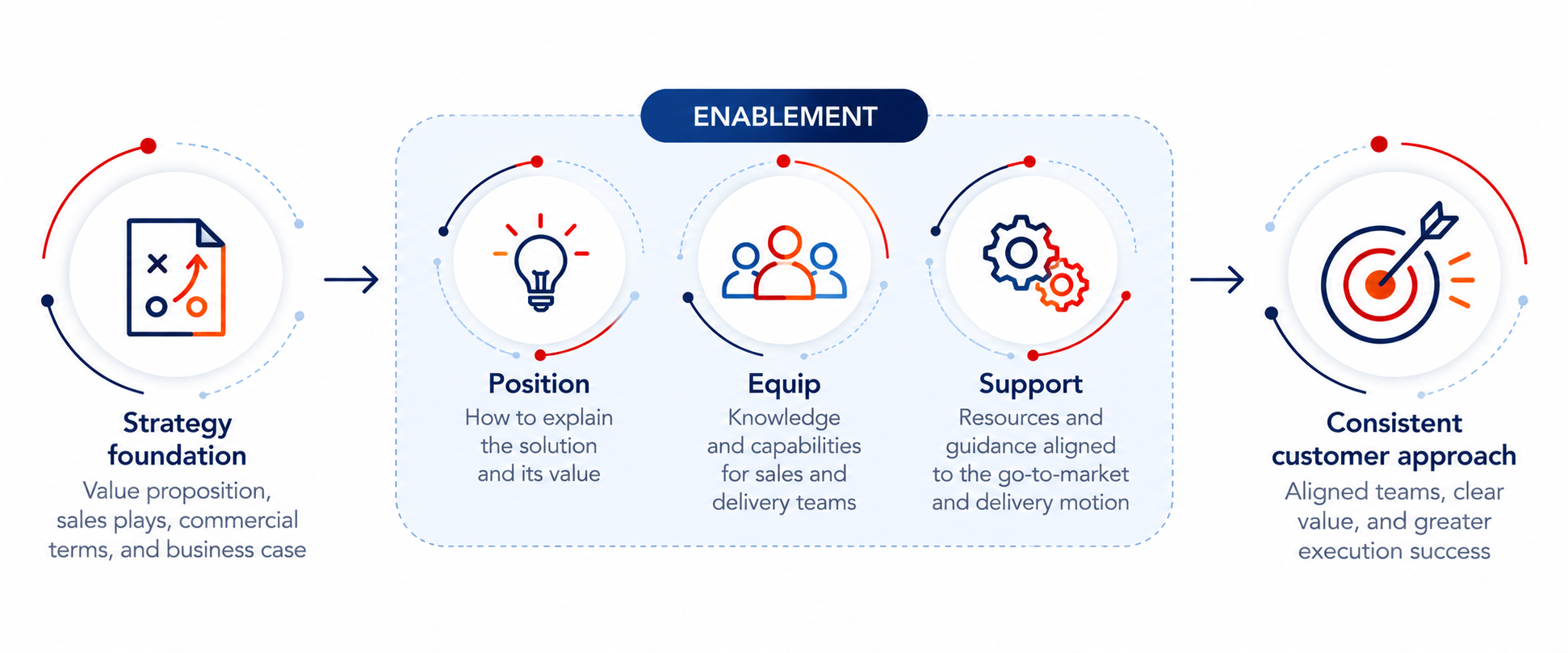 Enablement needs to be built into the GSI strategy from the beginning.
Technology companies need to establish the value proposition, sales plays, commercial terms, and business case. They also need to give the GSI the knowledge and capabilities required to take the solution to market.
That means considering how the organizations will position the solution, explain its value, and support delivery. The objective is to help both sides approach the customer with a consistent understanding of the opportunity and how the solution will meet the customer’s needs.
Enablement should support the actual sales and delivery motions the organizations intend to pursue.
4. Establish clarity, purpose, alignment, and trust
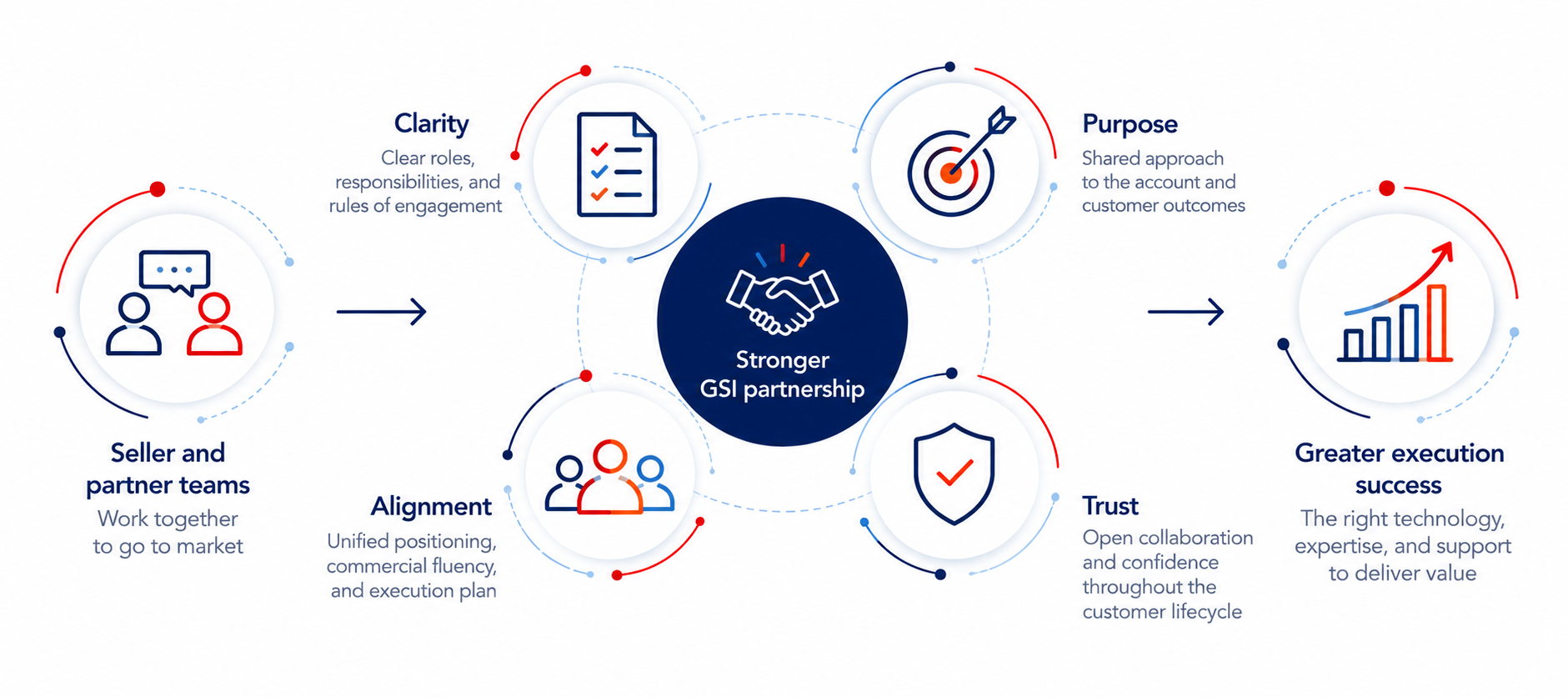
These four elements provide the foundation for seller and partner teams to go to market together.
Teams need a shared approach to the account, with clear responsibilities throughout the customer lifecycle. They should understand the GSI’s relationship with the customer, who is leading the engagement, who serves as the prime, and how the organizations will work together.
Rules of engagement need to be established upfront. When responsibilities and expectations remain unclear, disconnects and conflicts can arise during the sales process or delivery.
Commercial fluency matters, too. Both teams need to understand the complete solution, the sales play, the value proposition, and the positioning before engaging the customer.
When everyone is aligned, the OEM can provide the necessary technology and support, while the GSI connects the different elements to deliver the intended customer outcome.
5. Align incentives with the behavior the partnership requires
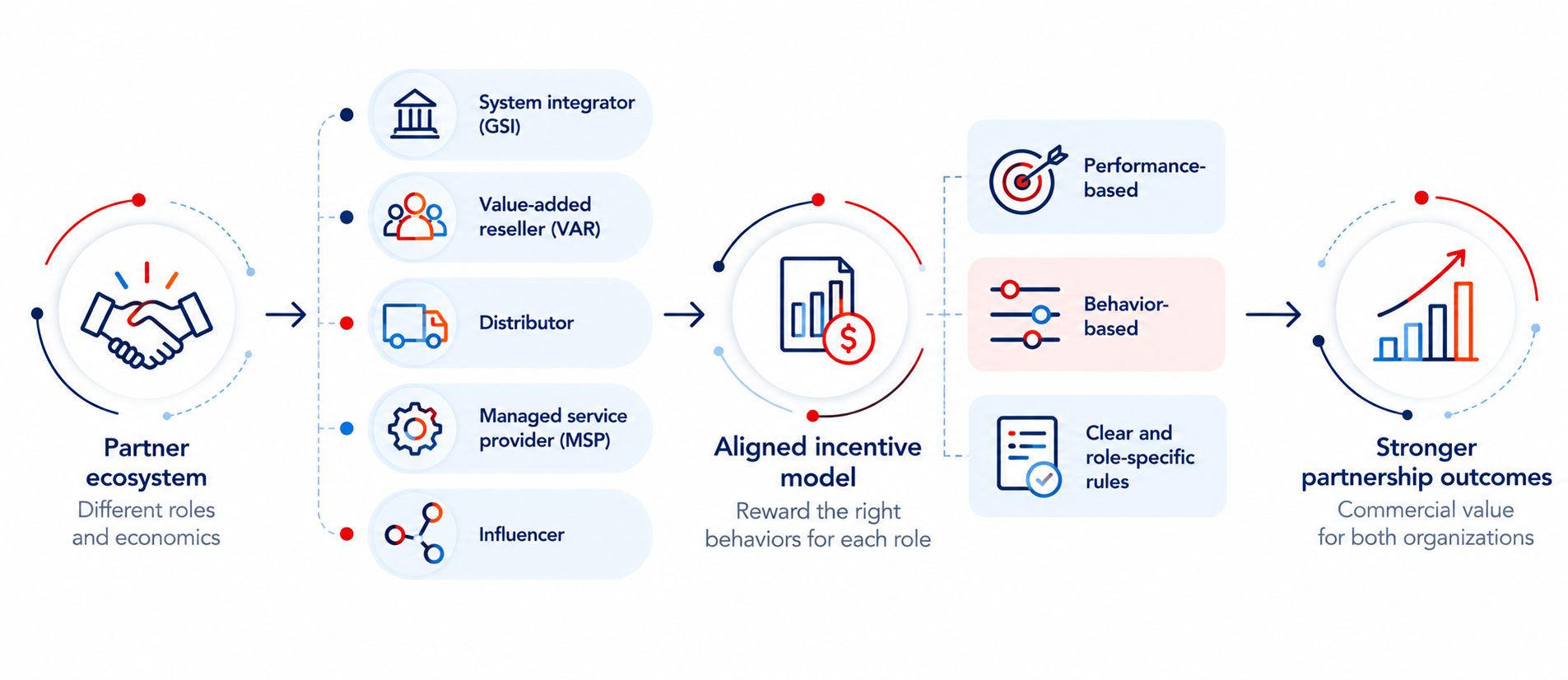
The operating model needs to reward the behavior required for the partnership to succeed.
A system integrator, value-added reseller, distributor, managed service provider, and influencer may all contribute to an ecosystem, but their roles and economics differ. The incentive structures that work for one type of partner or transaction may not apply to another.
As GSIs change how they engage customers and transact, technology companies need to reconsider how their incentive models accommodate those different motions.
The goal is a performance-based, behavior-based incentive model that makes commercial sense for both companies. The rules should be clear and reflect the role each organization plays in the transaction.
6. Connect executive commitments to field-level execution
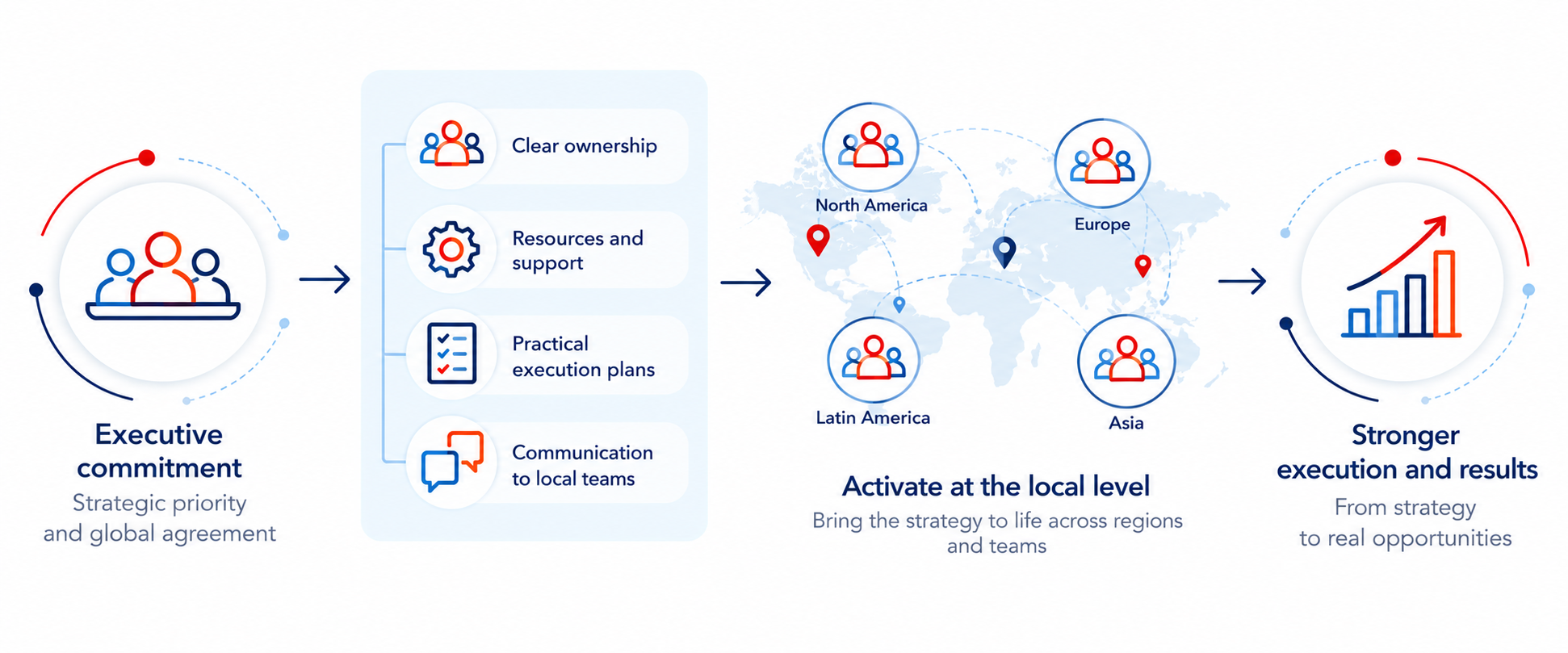
One of the biggest gaps I see is between executive ambition and field-level execution.
A partnership may be strategically important to both organizations, yet individual sellers or delivery leaders may find it difficult to put into practice. The global commitment exists, but the resources, ownership, or practical steps needed to activate it are missing.
This challenge becomes especially apparent in global relationships. A strategic partnership established at headquarters in France, for example, still needs to translate into workable opportunities across North America, Latin America, and Asia.
Technology companies need to consider how commitments will reach local teams and become part of their day-to-day work. Clear ownership, appropriate resources, and practical execution plans help bridge that gap.
7. Turn joint propositions into deployable offerings
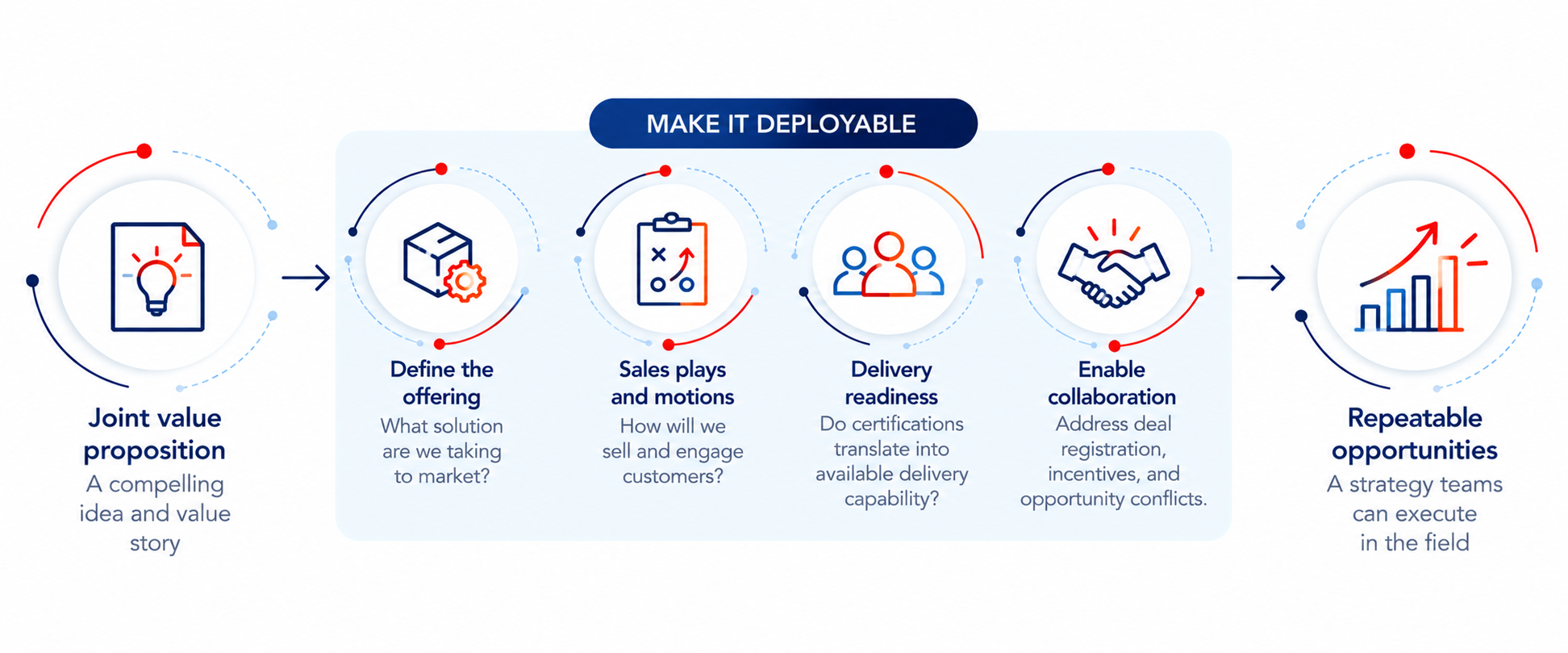 A joint value proposition can look compelling in a presentation or a PDF. The next question is whether the organizations can actually take it to market.
What is the deployable offering? What sales plays support it? Which motions and tactics will the teams use? Do the necessary certifications translate into available delivery capabilities and capacity?
These are practical questions, but they determine whether a strategic plan can become a repeatable business opportunity.
Technology companies and GSIs need to define the offerings, capabilities, and activities required to deliver on their commitments. They also need to address issues such as opportunity conflicts, deal registration, and compensation when those mechanisms interfere with collaboration.
A strategy becomes more useful when teams can act on it in the field.
8. Make the relationship more relevant to the customer
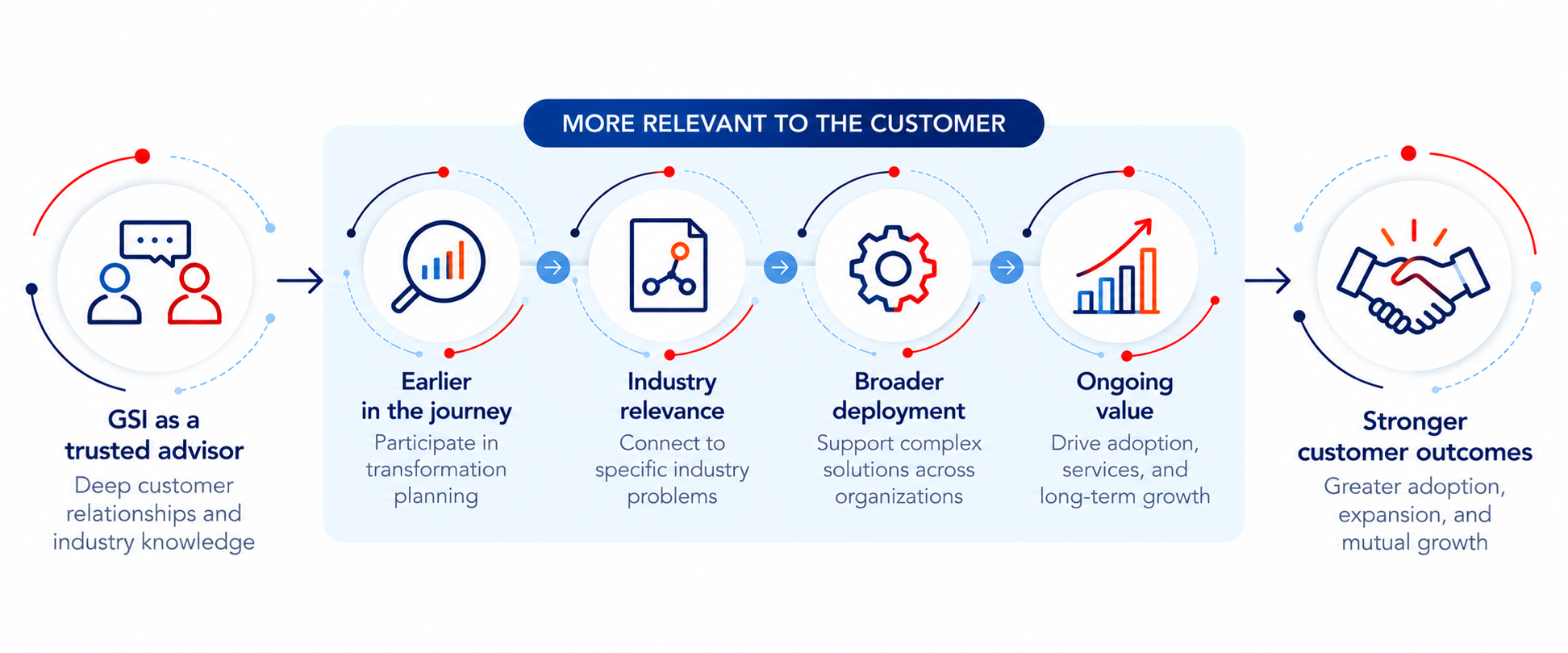 A well-designed GSI relationship can help a technology company participate earlier in customer transformation planning, connect its products to industry problems, and support deployment across complex solutions and organizations.
GSIs often serve as trusted technology advisors to large enterprises. Customers may turn to them to develop a reference architecture and recommend the OEMs and technologies best suited to the outcomes they want to achieve.
That creates an opportunity for technology companies to become part of a broader solution and contribute to customer decisions earlier in the process.
Industry relevance, repeatability, customer adoption, and profitable expansion are important considerations. The relationship should also account for ongoing services and the full lifecycle of the customer’s needs, as those requirements continue to evolve.
9. Ask why a GSI would continue investing in your technology
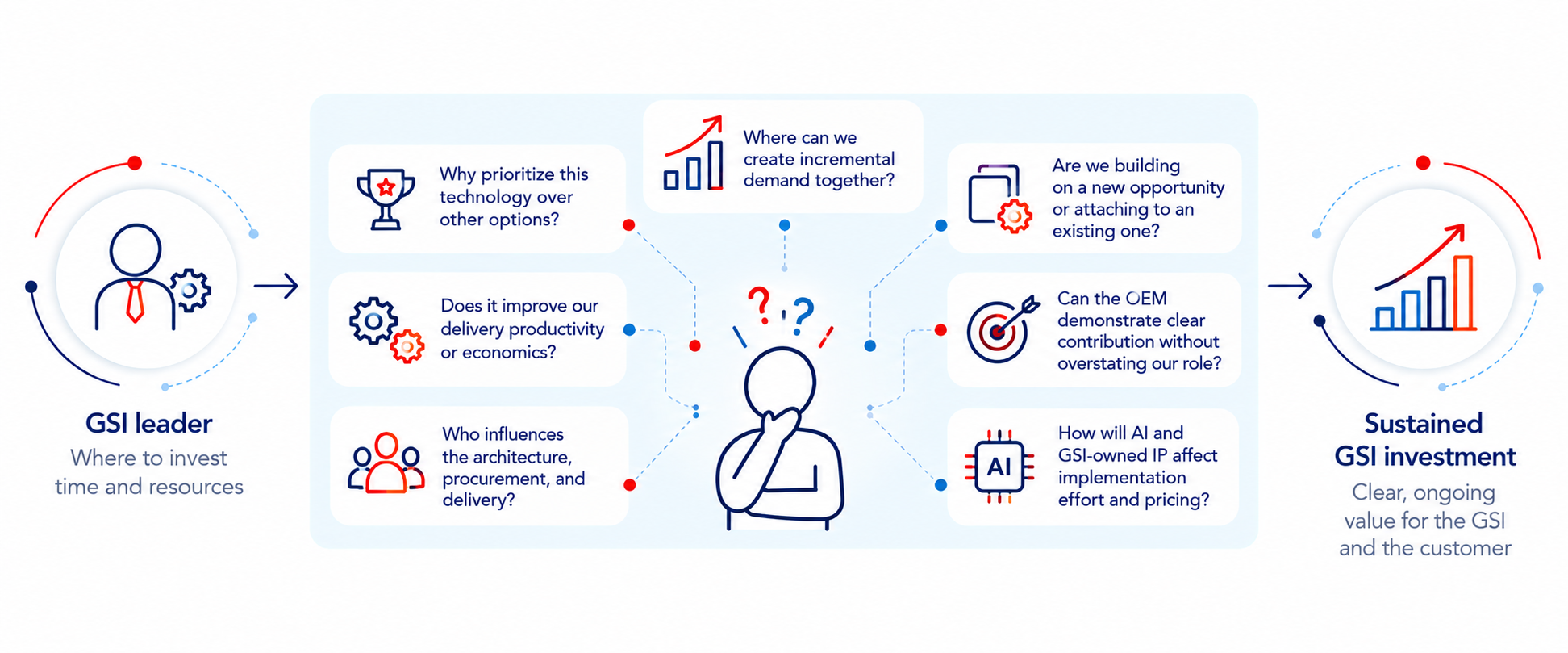 GSI leaders make investment decisions about where to direct their time, resources, effort, and attention. Technology companies need to understand what makes their offerings worth that sustained investment.
I would start with several questions:
- Why would a GSI practice leader prioritize this technology over competing platforms or the GSI’s own assets?
- Where can the OEM and GSI create incremental customer demand, and where are they attaching themselves to an existing opportunity?
- Does the technology improve the GSI’s delivery productivity or the economics of its offerings?
- Who influences the architecture, controls procurement, and leads delivery?
- Can the OEM demonstrate its contribution without overstating the partner’s influence?
These questions help leadership examine the value the relationship creates for the GSI and the customer.
They also bring attention to two issues that deserve closer examination as technology advances: how AI may reduce implementation effort and affect pricing models, and where GSI-owned intellectual property may overlap or compete with OEM intellectual property.
As workflows and AI agents become more prominent, those boundaries may become increasingly important.
10. Prepare for GSI delivery models that combine people, software, proprietary assets, and AI
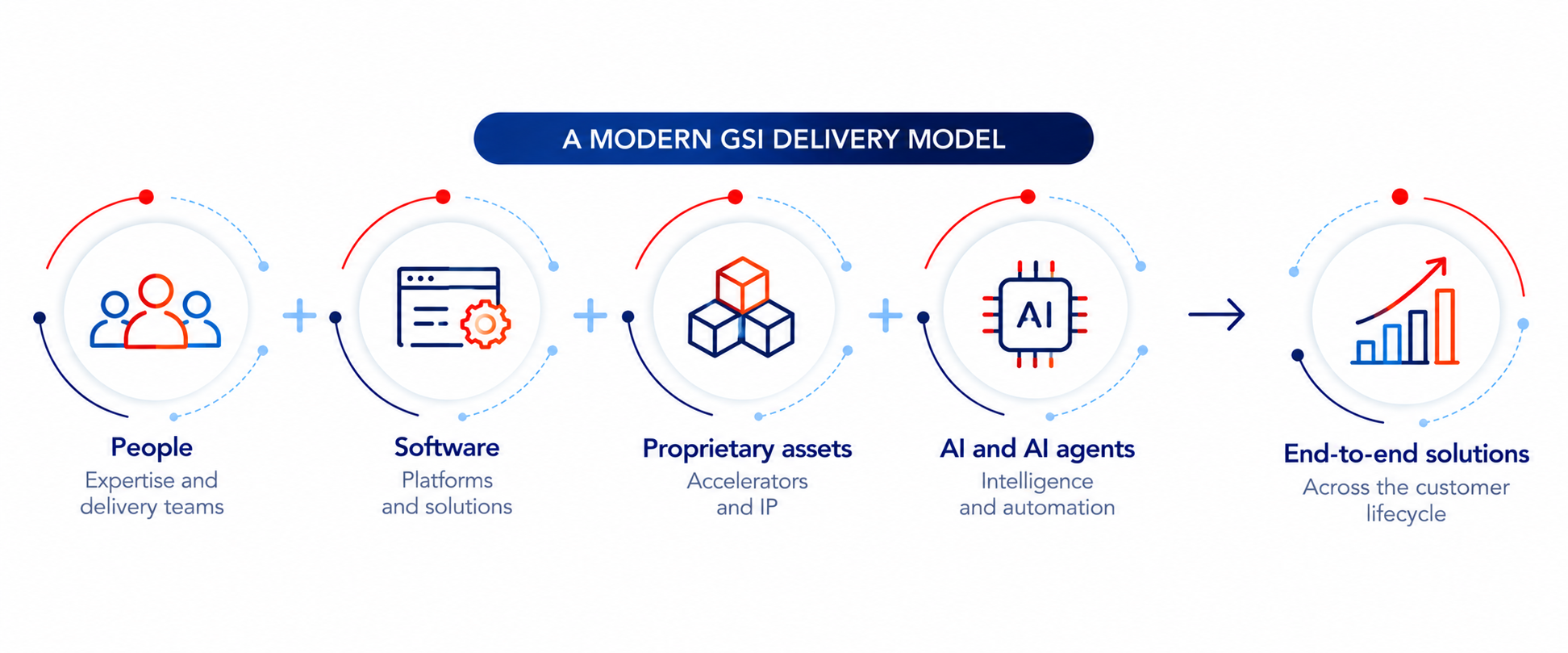
Technology companies need to prepare for GSIs to combine people, solutions, software, proprietary assets, and AI agents in their delivery models.
This shift has implications for how solutions are designed, governed, priced, and delivered. AI may change implementation effort and the economics of services, while new technologies can introduce additional opportunities and challenges.
TCS has also discussed the development of Human + AI service models and the importance of unified governance across the AI stack. Read the TCS Annual Report for additional context on this direction.
Quantum computing and cryptography, for example, present significant opportunities alongside security challenges. Technology companies need to consider how these developments affect the solutions they bring to market and the expertise required to deliver them.
We can expect GSIs to continue expanding their offerings, providing more end-to-end solutions, and participating across the customer lifecycle. Strategic relationships between hyperscalers, major AI players, and GSIs will also remain important as these delivery models develop.
For technology companies, preparing for these changes means understanding how the GSI’s business model, capabilities, and customer requirements may shape the relationship over time.
Bringing the strategy together
The future of GSI partnerships will depend on how well technology companies adapt to the businesses their partners are building. As GSIs combine services, software, proprietary assets, and AI-driven capabilities, OEMs will need to reconsider how they create value together, structure commercial models, and support execution across the customer lifecycle.
For leaders reassessing their GSI strategy, one question deserves particular attention: Why would a GSI choose to invest its people, resources, and expertise in your technology, and can that investment create measurable value for both organizations and the customer?
The answer can help determine where a partnership has the potential to grow, what needs to change, and how to turn a strategic relationship into a business that both organizations can build on.
If you’re ready to take to next level your GSI partnerships Contact Us here
Frequently Asked Questions
What is a GSI partnership?
A global systems integrator (GSI) partnership is a business relationship between a technology company and a systems integrator that combines technology, services, and industry expertise to address customer needs and deliver broader solutions.
How can technology companies build stronger GSI partnerships?
Technology companies can strengthen GSI partnerships by defining a shared customer opportunity, connecting their value proposition to the GSI’s offering, aligning commercial incentives, establishing clear responsibilities, and ensuring executive commitments translate into field-level execution.
Why do GSI partnerships struggle to deliver results?
GSI partnerships can struggle when strategic commitments are not supported by clear ownership, adequate resources, practical sales plays, delivery capabilities, or aligned commercial models. Unclear rules of engagement and conflicting incentives can also make collaboration more difficult.
How should technology companies structure incentives for GSI partners?
Incentives should reflect the GSI’s role in the transaction, the behavior the partnership needs to encourage, and the economics of the joint offering. A model that works for a reseller or distributor may not fit a GSI delivering complex solutions or ongoing services.
How is AI changing GSI partnerships?
AI is expanding the ways GSIs can combine people, software, proprietary assets, and AI agents to deliver solutions. Technology companies need to consider how these capabilities affect solution design, implementation effort, service economics, pricing, and delivery models.
What should technology companies evaluate before investing in a GSI partnership?
They should assess the customer opportunity, strategic fit, shared value proposition, commercial viability, delivery readiness, and the GSI’s reasons to invest its resources in the technology. They should also clarify how both organizations will contribute to customer outcomes.