Why the next competitive advantage belongs to partner and sales teams that pair AI with self-awareness, coaching, and real accountability.
The Adoption Gap Is Real, and Growing
Companies are investing heavily in AI to improve partner execution, sales performance, and decision quality, and for good reason. AI is now widely used across business functions, with marketing, sales, and partner ecosystems among the most common use cases.
Yet impact remains uneven. McKinsey’s 2025 global survey found that 88% of organizations report regular AI use in at least one business function, but only about one-third have begun scaling AI programs, and just 39% report EBIT impact from AI at the enterprise level. AI is spreading faster than value is compounding.
Partner and sales teams are a perfect example of that gap.
AI Is Doing Its Job. The Problem Is What Comes Next.
Salesforce’s 2026 State of Sales found that 94% of sales leaders using AI agents say they are essential to growth, yet sellers and partner managers still spend more than half their time on non-selling, non-strategic work. Meanwhile, 69% of sales professionals say measurable ROI is more important to customers than it was a year ago.
The pressure is rising on both sides: partner and sales teams need more capacity, and buyers and partners expect more business value.
AI is helping. Partner managers prepare for co-sell conversations faster. Accounts get summarized. Next steps are recommended. Deal risk gets flagged. These are real gains.
But here is a hard truth many organizations are now running into:
AI can identify the gap. It can even suggest the plan. But it cannot make a partner manager or seller change behavior.
Performance Is Not the Same as Productivity
Productivity is doing more activity with less friction. Performance is doing the right things, consistently, at a level that changes outcomes.
A partner manager can have better prompts, better call summaries, better account research, and better task automation — and still avoid the hard co-sell conversation, fail to prepare deeply enough for a QBR, or neglect the follow-through that keeps partners engaged.
Only 39% of employees receive AI training, creating a significant gap between tool availability and effective usage. Most partner organizations are experiencing this now. They have more information than ever. More tools than ever. But not enough behavior change.
This is precisely what the PRIME Framework™ addresses: the recognition that technology accelerates execution only when the underlying behaviors are already strong. AI without a framework for behavior change is productivity theater.
Why Self-Awareness Is the Missing Layer
The partner manager who improves fastest is usually not the one with the most AI support. It is the one who can accurately see the gap between current behavior and required performance.
HBR research shows that while 95% of people believe they are self-aware, only 10–15% actually are. That same research ties self-awareness to better decisions, stronger relationships, and stronger work performance.
In a partner ecosystem context, self-awareness looks like this: a partner manager knows whether the real issue is weak co-sell prep, shallow partner relationships, inconsistent follow-through, or poor deal qualification, and stops hiding behind activity metrics that look healthy but aren’t moving the pipeline.
The PQi® (Partnering Trust Quotient Index) exists precisely to make this visible. When partner managers can see their own partnering behaviors mapped against what high performance actually requires, self-awareness stops being abstract and becomes actionable.
Accountability Turns Self-Awareness Into Results
Gallup’s research argues that real accountability starts with clear expectations, frequent coaching, and a consistent standard for what strong performance looks like. When managers create regular coaching conversations, employees become more energized, better equipped, and more aligned around outcomes.
The 2026 State of Sales Coaching report found a growing gap between leaders’ intentions and sellers’ and partner managers’ reality — leaders believe they are coaching more while their teams say they are receiving less. That disconnect is directly impacting performance.
Salesforce’s data reinforces this: 75% of reps and partner managers say they are more likely to hit targets with a coach or mentor. Yet 46% rarely get feedback on their key conversations, and 52% say traditional enablement does not provide the skills they need.
AI can help fill part of that gap. It cannot replace human accountability, standards, and reinforcement.
What Sales and Partner Leaders Should Do Now
1. Stop treating AI adoption as a performance transformation.
They are not the same. AI can improve efficiency without improving partner execution quality or sales discipline. If your team is using AI tools but your partner-sourced pipeline, co-sell win rates, and partner engagement scores haven’t moved, you have an adoption problem, not a tools problem.
2. Define the few behaviors that actually drive results.
Not ten. Not twenty. A few. Better co-sell preparation. Stronger business conversations with partners. Cleaner partner qualification. More disciplined follow-through. More effective joint business planning. If behavior is at the center of performance, leadership must make the critical behaviors visible, measurable, and coachable, which is exactly what the PRIME Framework™ is built to do.
3. Use AI as a mirror, not a crutch.
Let it surface patterns, identify weaknesses, and generate targeted development plans. But do not let the organization pretend that recommendations equal execution. The AI Partnering Maturity Assessment is a practical starting point; it maps where your team actually sits today, so AI investment gets directed at the right gaps rather than the most visible ones.
4. Build a coaching cadence around accountability.
Review partner conversations. Practice key co-sell scenarios. Inspect the joint pipeline for quality, not just stage movement. Hold managers accountable for behavior change in their teams, not just activity levels and tool usage.
5. Create a culture where accountability means performance, not productivity.
Too many partner organizations celebrate responsiveness, CRM completion, and meeting volume while partner-sourced pipeline, co-sell win rates, and partner retention stay flat. Partner managers learn quickly what the organization actually values. If leadership rewards motion over outcomes, the culture becomes busy but underperforming.
The Bottom Line
AI is not the problem. In most cases it is doing exactly what it should: exposing blind spots, reducing friction, and giving partner and sales teams better information faster. The real question is what humans do with that information.
The next era of partner ecosystem performance will not belong to teams that simply have more AI. It will belong to teams that go beyond prompting, combining AI intelligence with self-awareness, coaching, and the accountability structures that turn insight into behavior change.
AI can tell a partner manager or seller what to improve.
Only they can choose to improve it.
🚀 We’re going beyond prompting.
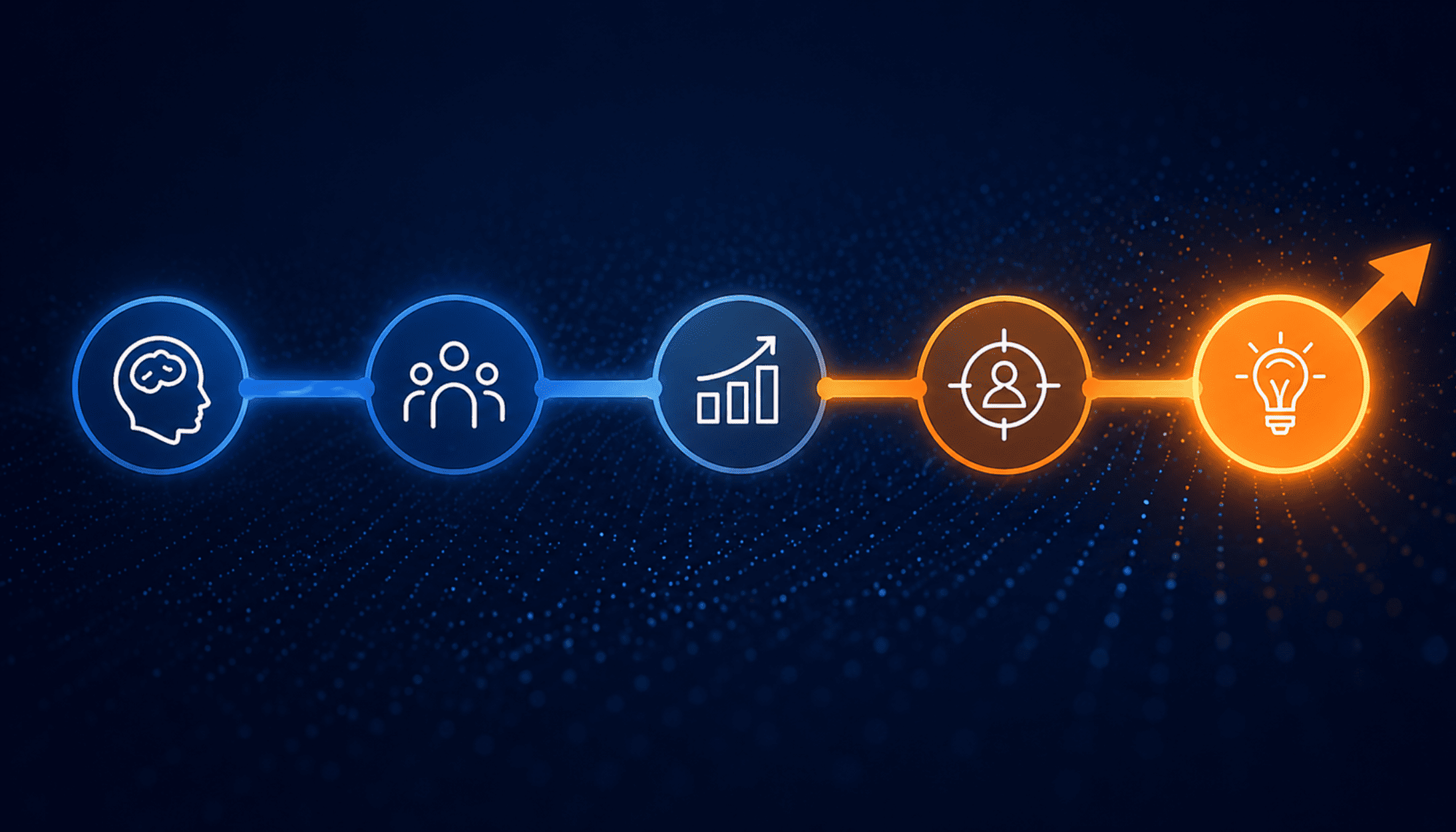
AchieveUnite helps enterprise technology companies architect partner ecosystems that produce predictable, partner-led growth. Our AI Learning Journey takes partner and ecosystem teams from foundational AI fluency to autonomous agent deployment, with five stages built for the way ecosystem teams actually work. Explore the whole journey here→
Frequently Asked Questions
The AI performance gap is the difference between having AI tools and seeing measurable business results from them. Most partner and sales teams have adopted AI for tasks like co-sell research, account summarization, and outreach — but behavior, execution quality, and business outcomes haven’t changed at the same rate. The gap exists because AI can diagnose problems but cannot change human habits or partner execution behaviors.
AI surfaces patterns and recommends actions, but performance improvement requires behavior change — and behavior change requires self-awareness, coaching, and accountability. These are human functions that AI can support but not replace. McKinsey notes that technology alone is insufficient for sustained performance, particularly in complex partner ecosystem environments where relationship quality and co-sell execution depend on human judgment.
AI fluency is the ability to apply AI tools consistently within real partner workflows in a way that produces visible business outcomes — not just task completion. A partner team with AI access that hasn’t changed how it executes co-sell motions, partner engagement cadences, or pipeline development lacks AI fluency, regardless of which tools they use or how many prompts they’ve learned.
Partner leaders close the AI performance gap by pairing AI adoption with three human elements: self-awareness (knowing exactly which behaviors are limiting results, surfaced through tools like the PQi®), coaching (regular structured feedback tied to those specific behaviors), and accountability (a consistent standard for partner performance that AI usage alone does not satisfy). The PRIME Framework™ provides the framework for making this systematic rather than episodic.
Going beyond prompting means moving from using AI for individual tasks, writing emails, summarizing calls, researching partner accounts, to building AI into the actual workflow layer of the ecosystem. It means deploying automated partner intelligence pipelines, AI-assisted co-sell preparation, and eventually autonomous agents that execute multi-step partner processes without manual intervention. AchieveUnite’s AI Learning Journey is the structured path from foundational AI fluency to this level of ecosystem automation.
Partner productivity is doing more partner activity with less friction — more outreach, faster research, quicker follow-ups. Partner performance is executing the right activities, at the right quality, consistently enough to change business outcomes like partner-sourced pipeline, co-sell win rates, and partner retention. AI primarily improves productivity. Closing the performance gap requires self-awareness, coaching, and accountability structures that AI supports but cannot replace.