



Have you noticed how partner influence in enterprise deals continues to grow?
Across many organizations, partners now bring earlier account insight, trusted relationships, and critical customer context into revenue opportunities. This shift is changing how deals are shaped, how forecasts are built, and how revenue teams collaborate.
At the same time, many revenue leaders are seeing familiar signals:
- Forecast accuracy is declining despite stronger tooling
- Deal cycles are extending as buying groups expand
- Partners increasingly shaping deals before direct sales teams engage
This is not a training gap. It is a structural methodology gap, accelerated by partner-led revenue models and AI-driven buying behavior.
The sales methodologies that built today’s revenue engines were designed for a world where a single seller owned the relationship, controlled the information flow, and guided the buying journey. That world is evolving, and the gap between how organizations sell and how buyers now buy continues to widen.
In conversations with CROs, partner leaders, and enablement teams, this shift comes up more often than many organizations expect.
The question is no longer whether partner-led revenue matters.
The question is whether your sales process and operating model are built to support it.
The Convergence Problem in Sales and Partner Ecosystems
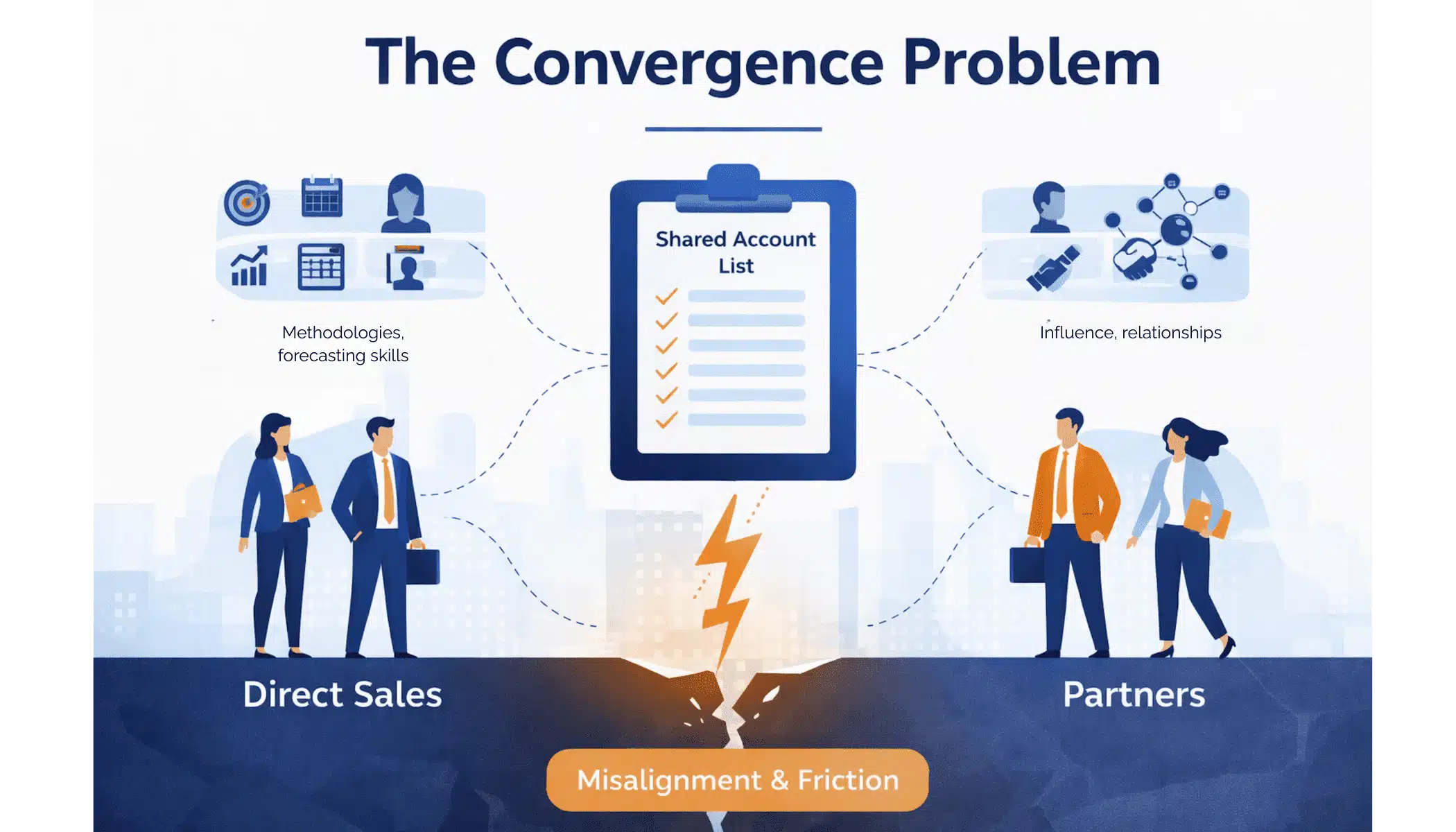
Many organizations now use a shared account list between direct sales and partners to reduce channel conflict and align go-to-market goals.
But while account ownership has converged, operating models often have not.
What hasn’t merged yet:
- Sales methodologies that still assume direct ownership
- Forecasting models built on single-threaded seller visibility
- Compensation structures designed for direct-only revenue
- CRM workflows tracking linear deals with one owner
- Enablement programs focused on controlling the sales conversation
Meanwhile, partners increasingly lead or heavily influence opportunities, leveraging long-standing customer relationships, domain expertise, and early-stage engagement, often well before a direct rep enters the deal.
This disconnect creates friction, misaligned incentives, slower velocity, and unrealized revenue potential across the ecosystem.
Two Operating Systems, One Revenue Pipeline
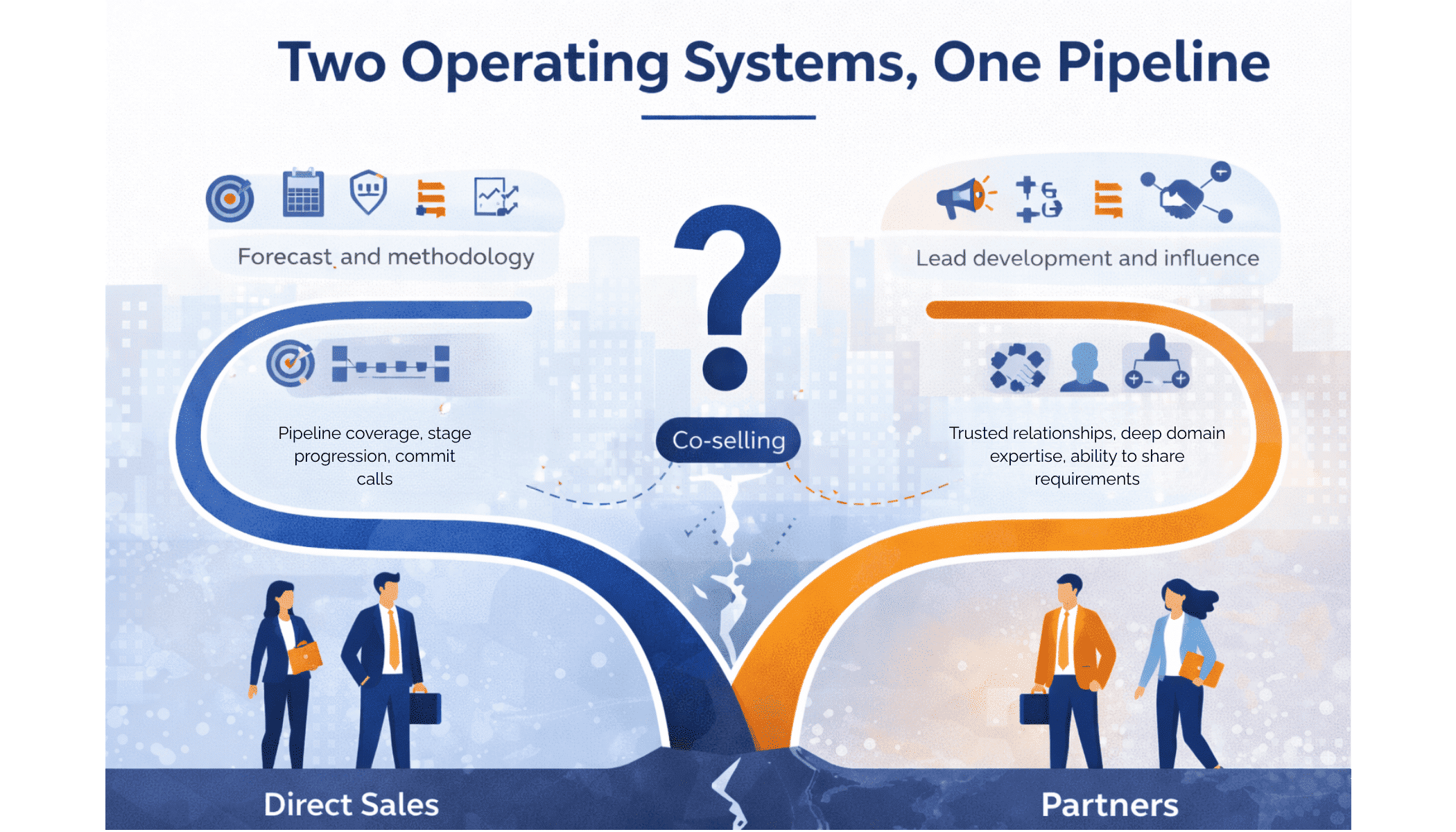
The tension becomes clearer when we look at how direct sales teams and partners operate in practice.
Direct Sales Typically Optimize For:
- Forecast accuracy and stage progression
- Pipeline coverage and commit reliability
- Deal control through structured methodology
- Weekly forecast calls, QBRs, and deal inspections based on firsthand buyer insight
Partners Typically Optimize For:
- Relationship depth and long-term account development
- Customer outcomes and industry credibility
- Influence over requirements through joint value creation
- Multi-year positioning and strategic opportunity shaping
Co-selling sits in the middle, and it is where the methodology gap becomes most visible.
Who owns the opportunity?
=”3794″ />>Who is accountable for advancing the deal?
When a partner has been nurturing a relationship for two years and a direct rep joined last quarter, traditional rules, such as ownership based on CRM entry, often feel misaligned with reality.
This is one of the most common friction points shared by CROs, revenue operations leaders, and partnership teams.
The Ecosystem Advantage, But Only If You Evolve
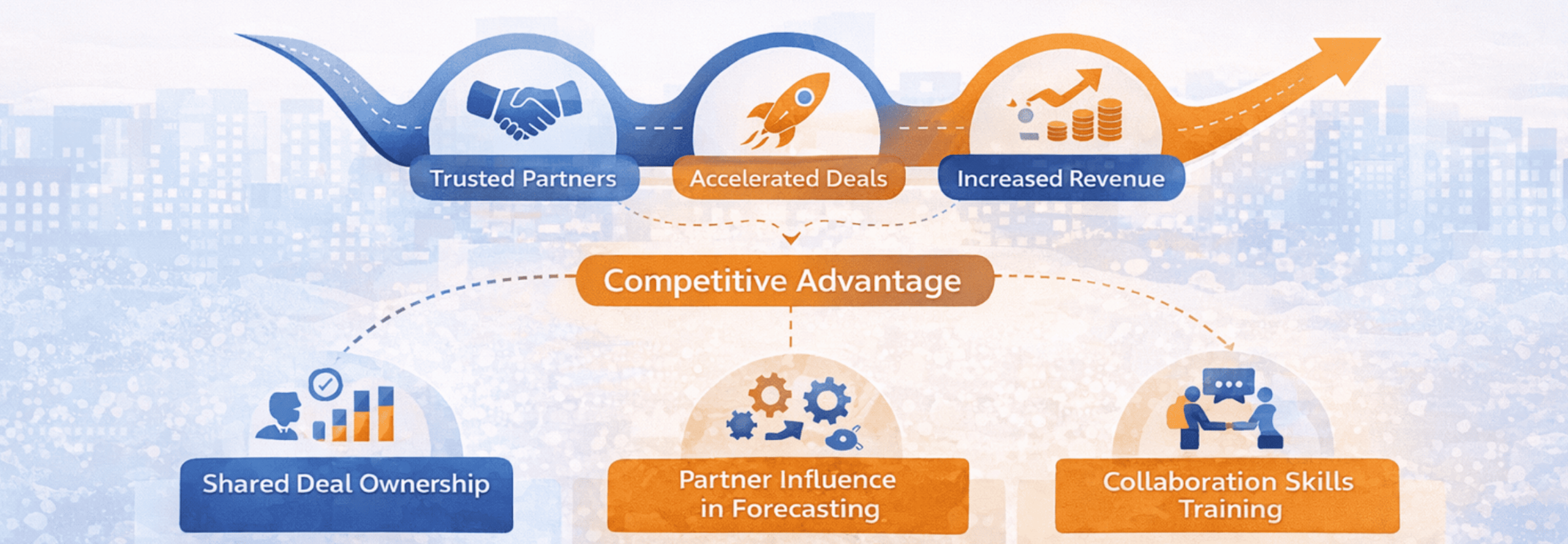
Partner ecosystems are becoming a genuine competitive advantage.
Research consistently shows that partner-influenced deals close faster and at higher value, and buyers increasingly prefer solutions that combine technology, expertise, and credible implementation partners.
Organizations that learn how to leverage partner relationships effectively will outperform those who treat partners as a secondary channel.
However, this advantage only materializes if sales behaviors, skill sets, and methodologies evolve to support shared deal ownership.
That evolution requires rethinking several core assumptions:
- Opportunity ownership must become contextual rather than absolute, based on relationship depth, domain expertise, and customer preference
- Forecasting must accommodate influence without direct control, especially as AI surfaces intent signals, account insights, and partner-driven intelligence
- Enablement must build orchestration and collaboration skills, not just traditional closing techniques
- Revenue systems must recognize multi-threaded ownership, reflecting how modern buying decisions are shaped across teams and partners
If revenue systems assume single-threaded ownership while buying behavior is multi-threaded, the methodology gap will continue to grow.
The Path Forward for Revenue, Enablement, and Partner Leaders
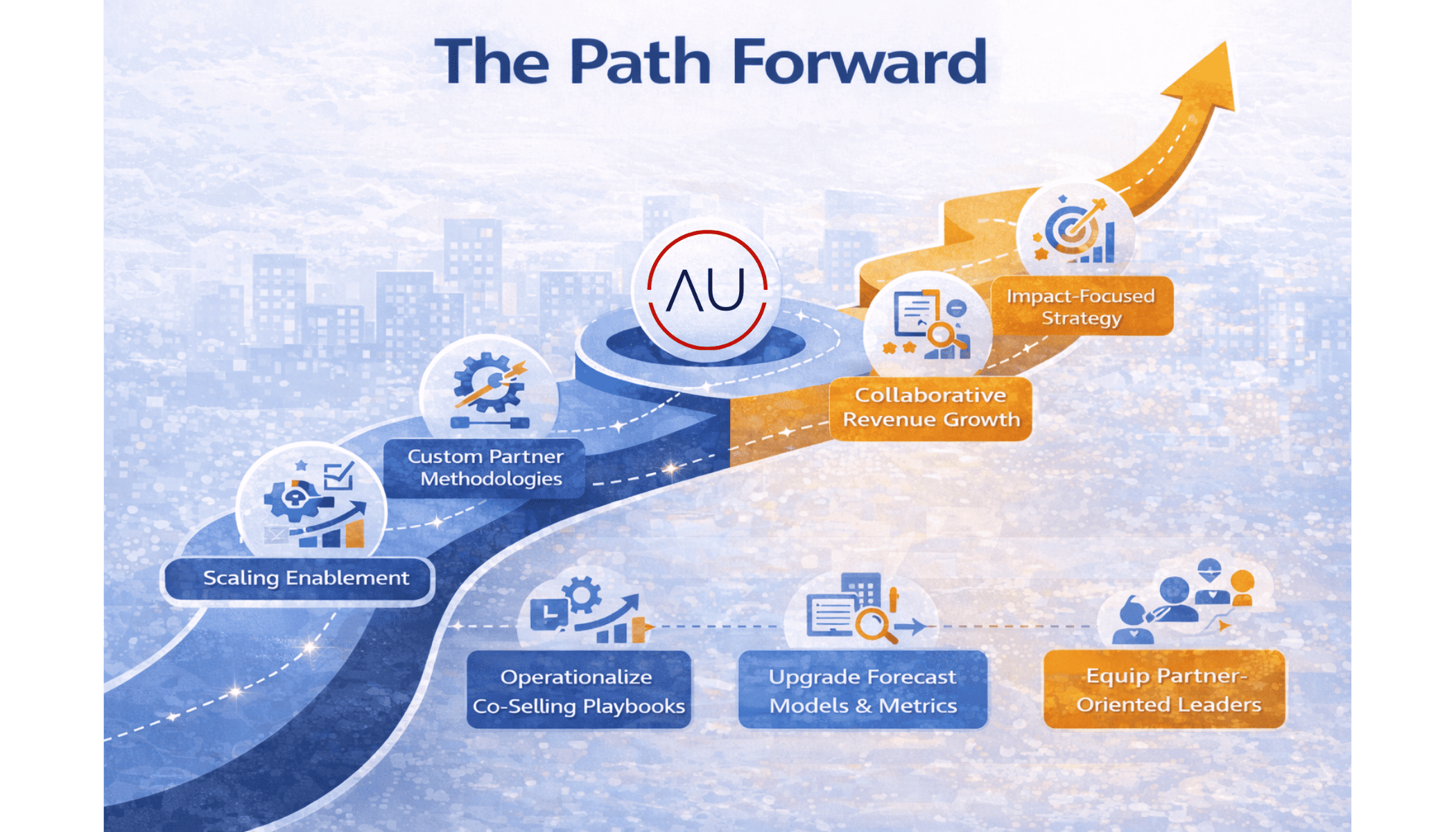
Organizations closing this gap share a common mindset:
They recognize that partner-led revenue requires an evolved operating model, not a replacement of existing methodologies, but an extension of them.
They are:
- Building co-selling frameworks that clarify ownership, process, and accountability
- Training teams to orchestrate deals they do not fully control
- Creating forecast models that distinguish between owned revenue and influenced revenue
- Evolving enablement programs to include partner collaboration, orchestration, and ecosystem execution
Most importantly, they recognize that partner-influenced revenue is not a temporary trend; it reflects a fundamental shift in how B2B buying works.
What this means across leadership roles:
- For CROs: Championing methodology evolution that extends direct-selling frameworks into ecosystem-driven revenue
- For Heads of Enablement: Building co-selling and orchestration as core capabilities
- For Revenue Operations: Tracking influence, not only ownership, and modernizing forecasting models
- For Partnership Leaders: Shaping processes that encourage partners to bring their most strategic opportunities
Organizations that successfully close this methodology gap gain a meaningful advantage, greater reach, stronger partner engagement, faster deal velocity, and deeper customer relationships.
Where AchieveUnite Supports This Evolution
In our work with partners and revenue leaders, we consistently see that sustainable growth is built on:
- Intentional alignment across teams and partners
- Clear commitment to shared ownership models
- Practical enablement that strengthens execution
- Long-term focus on Partner Lifetime Value
The AchieveUnite methodology is designed to sit on top of existing sales and partner frameworks, helping organizations evolve, not replace, how they plan, execute, and scale partner-led revenue.
As AI continues to reshape how deals are sourced, influenced, and closed, organizations need operating models that align people, partners, process, and intelligence into one cohesive system.
If you are exploring how to close this methodology gap within your organization, we are here to support that conversation.
FAQ:
What is the methodology gap?
It’s the disconnect between traditional direct-sales processes and how partner-influenced deals actually get shaped, forecasted, and won today.
Do we need to replace our current sales methodology?
No. Most organizations succeed by extending proven methodologies with a co-selling layer that supports shared ownership, partner influence, and ecosystem execution.
Why does this show up in forecasting?
Many forecast models assume the rep controls the relationship and has firsthand buyer visibility. In partner-led deals, influence is shared and signals come from multiple sources, including partners.
What needs to evolve first: process, enablement, or systems?
Start with clarity on ownership and accountability for co-sell deals. Then align enablement and RevOps systems to support that model.
How does AI fit into this?
AI accelerates visibility into intent, account signals, and partner-driven insights. It increases the need for operating models that align people, partners, process, and intelligence.
Who typically owns this inside an organization?
CRO, Partnership/Ecosystem leadership, Enablement, and RevOps. The best outcomes come when they align on a shared operating approach.
How can AchieveUnite help?
We sit on top of existing methodologies to help leaders build co-selling frameworks, strengthen execution, and align teams around Partner Lifetime Value.