


Last month, I wrote about how we’ve moved into a new partner ecosystem era built on co-innovation, co-marketing, and co-selling. Partnerships today are very different: collaborative, nonlinear, and anchored in shared value creation and trust. When done well, ecosystem-led growth delivers outcomes that traditional channel sales rarely reach.
Now I’m kicking off a three-part series on our new execution model, one that connects strategic planning with field execution, aligns partner and vendor forecasting, and equips everyone, from the CRO to the partner rep, with the clarity, accountability, and tools to win together. Over this series, I’ll cover how to:
- Build joint business plans that get executed and deliver results
- Forecast ecosystem revenue with confidence, not guesswork and chaos
- Enable partner sellers with the discipline and tools to create pipeline and close deals
AI plays a key role across these layers. It speeds planning, surfaces insights, and helps move co-sell motions from reactive to predictive. We’re not just building partnerships anymore. We are building a partner success operating system for this next era of partner ecosystems.
Joint Business Planning is the Foundation
Here’s the truth: many joint business plans look great on paper but fail in practice. Why? Because they never make it past the boardroom into the daily actions of sellers and partner managers. I call this the planning gap.
The Planning Gap: Why Great JBP’s Fail in the Field
The five most common reasons joint business plans collapse are:
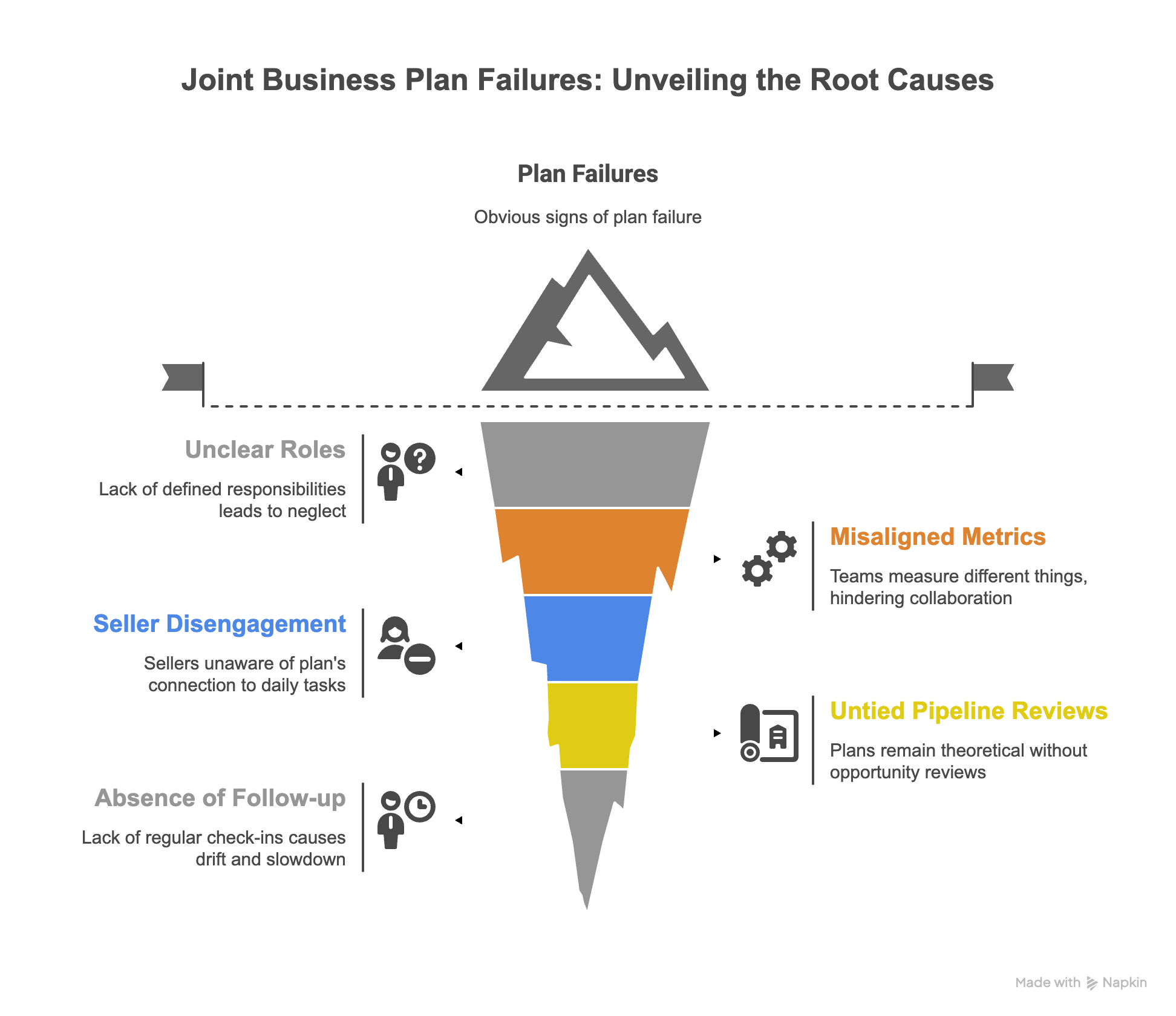
- Unclear roles and accountability: When no one is sure who owns what, everyone assumes “someone else” is handling it. Tasks slip through the cracks, and good intentions fade.
- No shared metrics: If you’re not measuring the same things, you’re not running the same plan. One team tracks the influenced pipeline, another tracks booked revenue. Both matter, yet they must line up.
- Low seller engagement: Plans are created at the executive level, but sellers never see them, or don’t understand how their daily work connects to the plan. That’s a fast track to irrelevance.
- Plans not tied to pipeline reviews: If joint business plans aren’t tied to actual opportunity reviews, they stay theoretical. Real progress comes when plans are discussed alongside real deals in motion.
- No rhythm of follow-up — Even strong business plans die if there’s no cadence of review. Without regular check-ins, priorities drift, and momentum slows.
Each of these can be fixed by moving from one-time planning to an operating model that stays active all quarter.
Execution Excellence: Turning Partner Plans into Wins
Treat the joint business plan as an execution framework, not a document. This requires three moves:
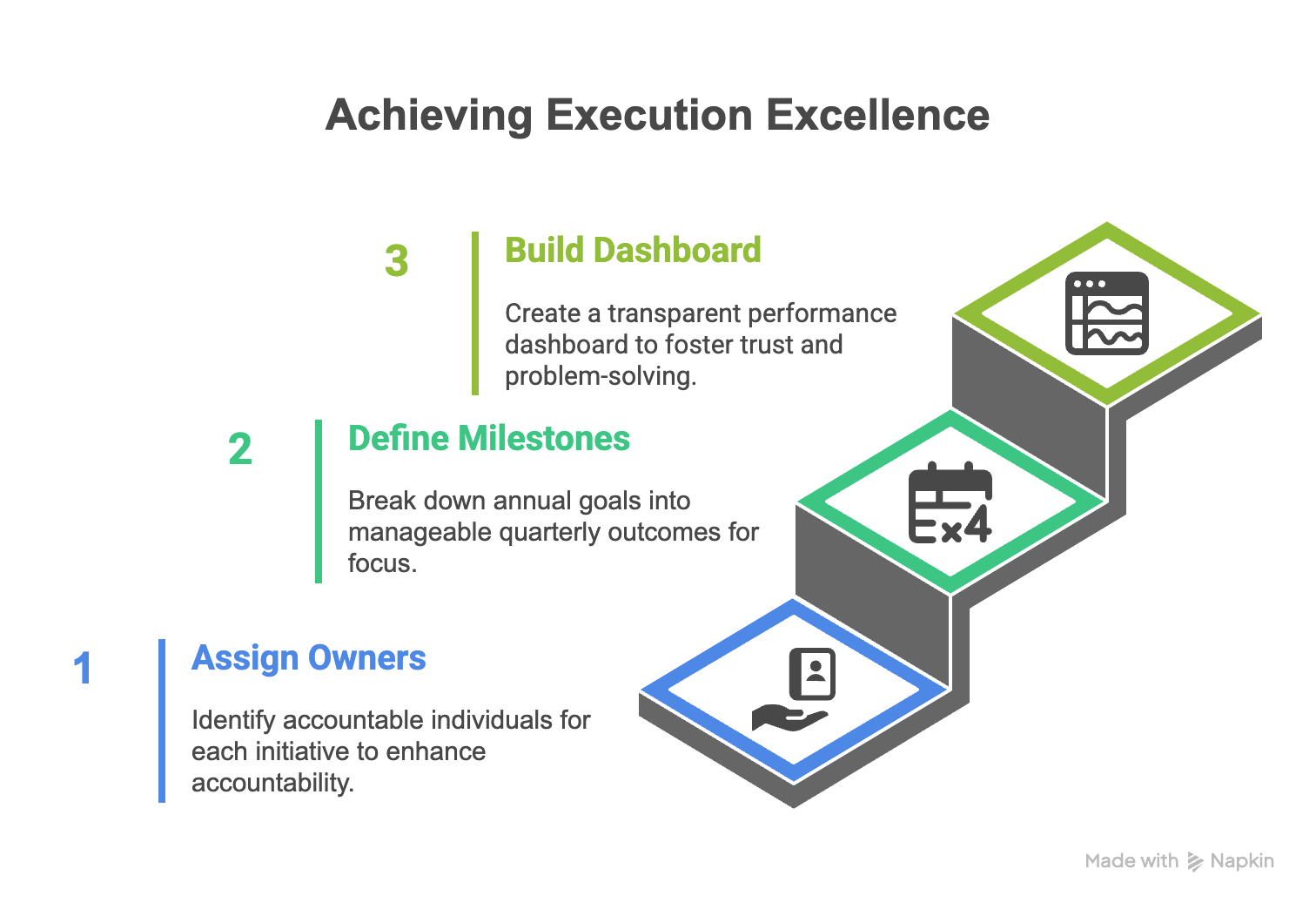
- Assigning clear owners for every initiative. Instead of “marketing will drive demand gen,” identify exactly which person is accountable for each milestone. When names are attached, and in general the person directly responsible for the outcome, then accountability and empowerment go up.
- Defining quarterly milestones and tracking them. Big annual goals are inspiring, but they’re also overwhelming. Breaking them into quarterly outcomes makes them manageable and keeps everyone focused on near-term wins.
- Building a performance dashboard that you can review together. If plan progress is tracked transparently, trust grows. When both sides can see what’s on track and what’s at risk, conversations shift from finger-pointing to problem-solving.
When we put this discipline behind the plan, something magical happens: trust grows. Vendors and partners begin to see that goals aren’t just aspirational, they’re achievable. Risks surface early, so you can adjust. And the plan itself becomes a living guide that directs day-to-day action, instead of a PowerPoint buried in a file.
From Alignment to Acceleration: Joint Operating Rhythms
The final ingredient is what I like to call Joint Operating Rhythms. These are structured, recurring touchpoints that keep the heartbeat of the partnership alive.
Examples that work:
- Monthly or weekly health checks that review progress against key initiatives.
- Quarterly business reviews (QBRs) where both leadership and functional teams revisit milestones, risks, and next-quarter priorities.
- Deal acceleration sessions where field sellers from both sides come together to align on specific opportunities.
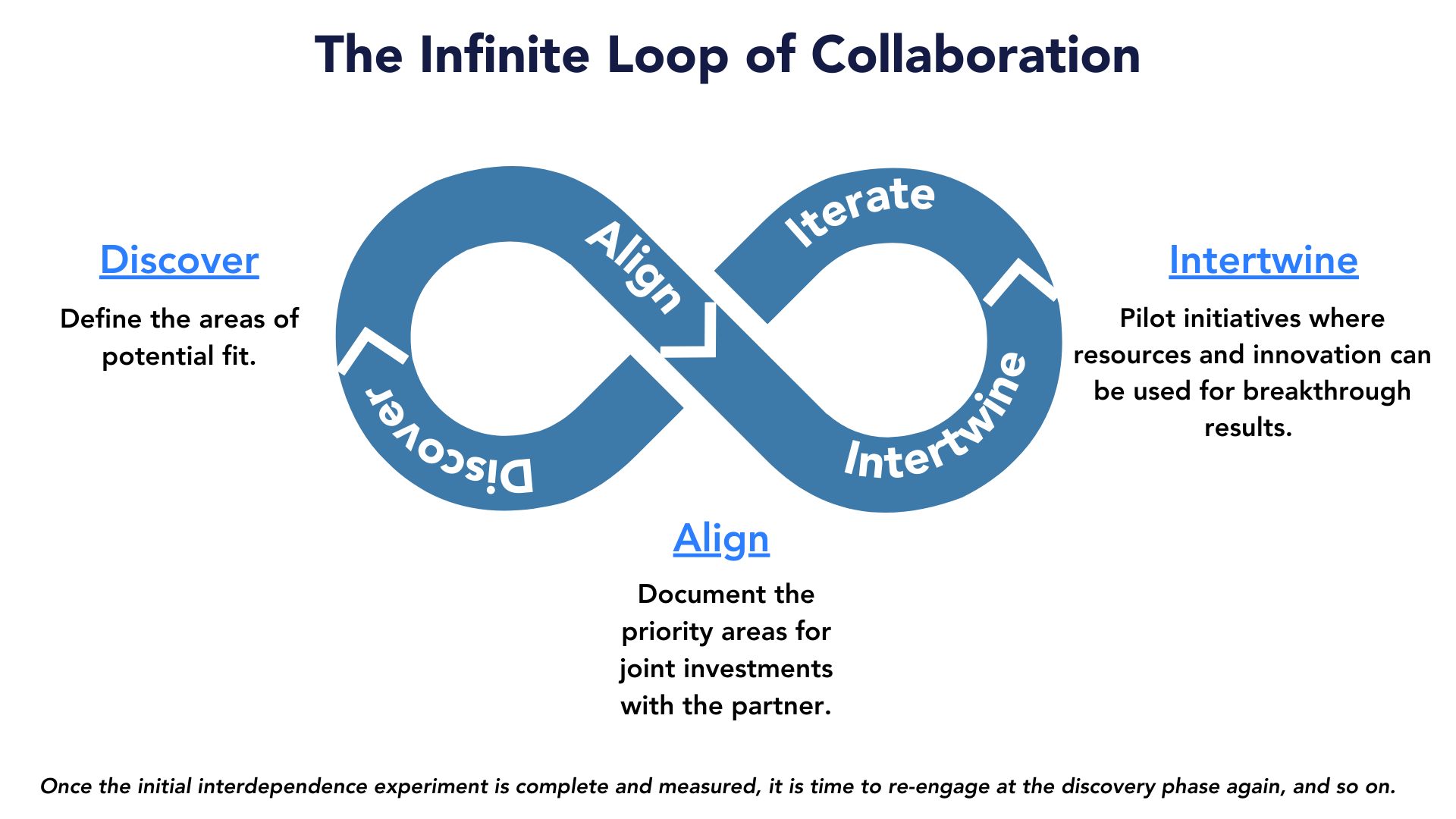
Here’s the secret: partnerships rarely fail because of poor strategy. They fail because there’s no rhythm to sustain the momentum. Without a steady operating cadence, even the best-laid plans lose energy. But with a scheduled regular rhythm? Teams stay engaged, sellers feel supported, and results start to compound. It becomes an infinite loop of collaboration that drives continuous growth.
Bonus: CELEBRATION: Plan for Success with a Grand Celebration if the annual milestone is achieved – a sports game, concert, joint celebration, and celebrate small wins too!
How AI Can Help at the Planning Stage
Use AI where it speeds up planning and keeps teams aligned:
- Analyze past partner performance using AI and input historical quantitative and qualitative data to recommend the right growth areas for your next joint business plan.
- Highlight which GTM plays have historically produced the highest ROI across similar partnerships.
- Draft the joint business plan by suggesting milestones, assigning roles, and aligning initiatives with forecast models.
Will AI replace the trust and human relationships at the heart of partnerships? Absolutely not. But it can give us smarter starting points and sharper insights, so we spend less time debating what to put in the joint business plan and more time executing it.
Want to Increase Your Partnership Skills?
- For a deeper reading into these concepts, my book Partnering Success, the Force Multiplier to Achieve Exponential Growth is available at your preferred bookseller. Chapter Ten details The Essentials of Building Partnerships.
- Level up your partner motion this quarter: sharpen strategy with PAB (Partner Acceleration Bootcamp) for structure, leadership skills, and a clear plan for partner programs, or raise execution with PPA (Partner Performance Acceleration) for coaching, playbooks, and metrics that move pipeline and renewals.
FAQs: Joint Business Planning for Partner Ecosystems
1) What is Joint Business Planning with partners?
Joint Business Planning (JBP) is a shared plan between a vendor and a partner that sets goals, milestones, owners, and metrics for growth. It connects strategy to field execution inside partner programs.
2) Who owns a JBP, and what cadence keeps it moving?
Give each initiative a named owner on both sides: one executive sponsor and one day-to-day owner, plus contributors. Keep it active with a simple rhythm: monthly health checks and a quarterly business review on the calendar for the year.
3) What belongs in a strong JBP?
Clear goals, target accounts or segments, co-marketing and co-sell plays, quarterly milestones, success metrics, risks, owners, and a review schedule. Keep it to one page with links to details. Track metrics like sourced and influenced pipeline, win rate on joint deals, milestone attainment, and time to first activity.
4) How do we connect JBP to field execution in PRM/CRM?
Store the plan where teams already work. Use CRM fields for milestones, roles, and next steps. Use PRM for enablement and assets. Tie the plan to live pipeline reviews so meeting agendas and follow-ups reflect the JBP.
5) Where does AI help in Joint Business Planning?
AI can summarize partner performance, suggest milestone drafts, compare past plays, draft briefs or slides, and flag risk or opportunity from usage and pipeline signals. People make the calls; AI speeds prep and keeps the plan current.