



Co-selling has become one of the most important growth drivers in today’s partner ecosystems. But even with years of experience, many organizations still struggle to turn co-selling from a good idea into a scalable, measurable business motion.
That’s why AchieveUnite gathered senior executives from leading technology firms for a Co-Selling Executive Roundtable. Together, they explored what’s working, what’s changing, and how co-selling will evolve as AI and partner ecosystems reshape go-to-market models.
Five powerful insights emerged, each revealing what the most forward-thinking partner leaders are doing differently today to prepare for 2026.
1. From Transactional to Collaborative: The Evolution of Co-Selling

Co-selling is shifting from transactional alignment to deep collaboration around shared outcomes.
Executives discussed how the speed of business has made many teams impatient with the trust-building process. Marketplaces have made transactions faster, but they’ve also made relationships thinner.
The consensus: patience, trust, and executive alignment are still the foundation of sustainable co-sell success.
Actionable takeaway:
- Reinvest in executive-to-executive alignment between your organization and top partners.
- Build a “Co-Sell 360” framework that integrates strategy, execution, and feedback loops—so collaboration isn’t episodic, it’s ongoing.
2. Generational and Buyer Shifts Are Redefining Collaboration
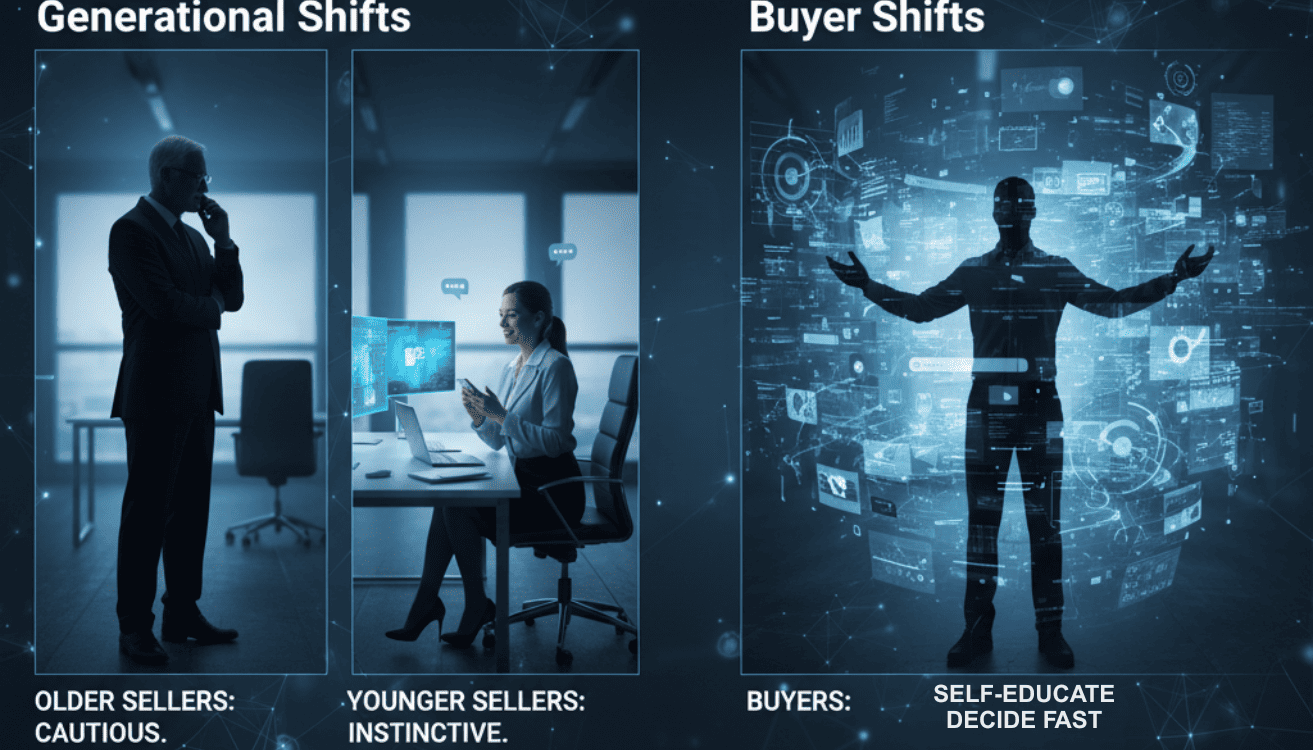
A major discussion point was the impact of generational change—both among sellers and buyers.
Younger sellers view collaboration as instinctive. They don’t think twice before messaging a peer at a hyperscaler or partner company to solve a deal challenge. Meanwhile, older sellers often approach co-selling as a separate activity that needs justification.
At the same time, buyers are changing faster than sellers. They self-educate, research independently, and often make purchasing decisions before ever meeting a sales rep.
Actionable takeaway:
- Rethink partner enablement through a digital-first lens—equip teams to add value after the buyer has self-educated.
- Encourage next-generation sellers to model collaborative behavior across your ecosystem.
3. New Metrics for Measuring True Co-Sell Impact
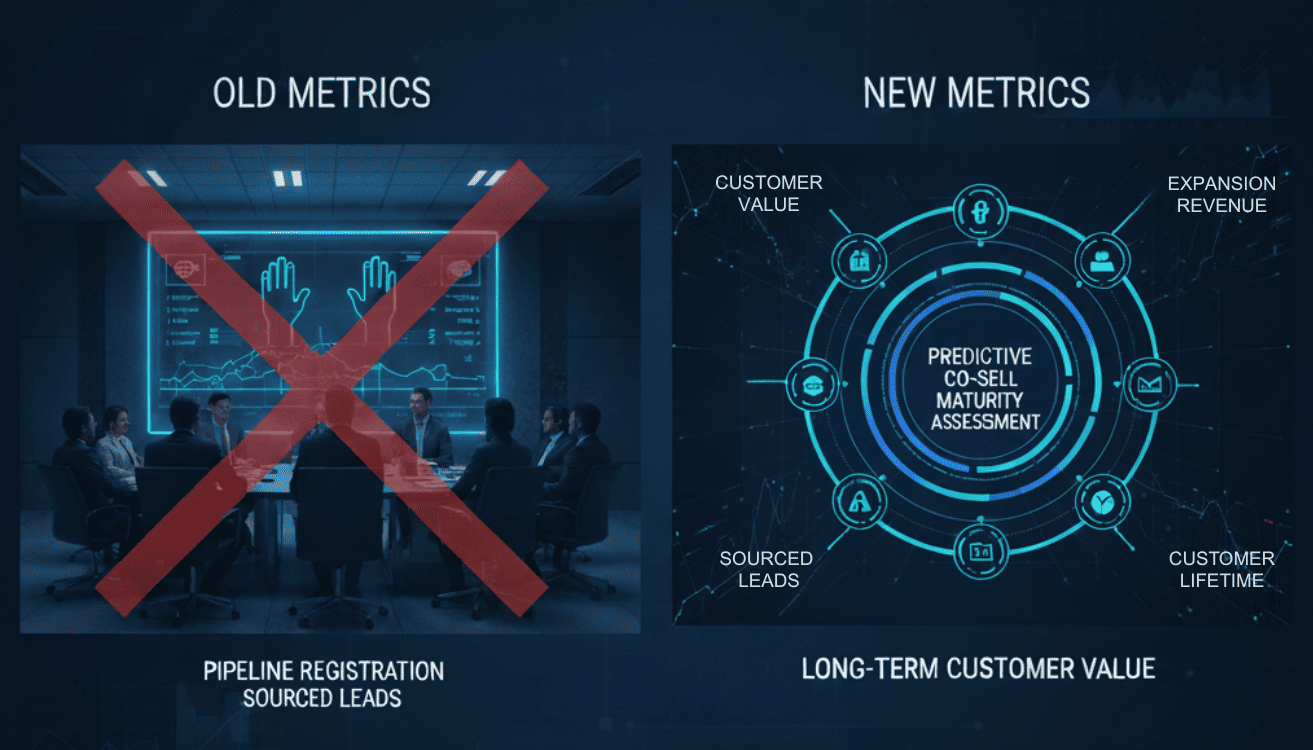
When one roundtable participant asked, “How many of your sales teams are co-selling effectively?” only two out of eight executives raised their hands. The insight was clear: most companies are still in the early phases of co-sell maturity.
Leaders emphasized that co-selling requires ongoing enablement and new ways to measure progress. It’s not just about pipeline registration or sourced leads, it’s about expansion, renewals, and long-term customer value.
Actionable takeaway:
- Separate acquisition metrics (registrations, sourced leads) from retention and expansion metrics (renewals, customer lifetime value).
- Benchmark your team’s co-sell performance using the Predictive Co-Sell Maturity Assessment to identify gaps and opportunities.
4. AI and Automation: The New Accelerators of Partner Success
 AI emerged as a defining theme for the future of co-selling.
Executives compared today’s AI transformation to the early days of cloud: disruptive, confusing, and full of potential. Many are already using AI agents to answer partner questions, manage reimbursement eligibility, or automate solution configuration.
But the message was clear: if your organization isn’t enabling partners with AI, they’ll innovate around you, and take that value to market first.
Actionable takeaway:
- Implement AI-driven co-sell enablement tools to simplify partner onboarding, deal registration, and joint marketing.
- Train both internal and partner sellers on effective AI prompting and collaboration workflows.
5. The Rise of “Convenience Teaming”

Several executives described the growing trend of “convenience teaming”, temporary alliances formed to win specific opportunities.
In this model, multiple partners may be active within the same account, each playing a different role (MSP, connectivity manager, security provider, etc.). The challenge lies in visibility and accountability.
Actionable takeaway:
- Map account-level partner roles across the full customer lifecycle.
- Clarify ownership, responsibilities, and success metrics in your CRM or partner management system.
- Encourage partners to co-plan renewals and expansion opportunities, not just new deals.
Building the Foundation for 2026 and Beyond
Every leader agreed: change is accelerating. Co-selling isn’t just a program, it’s a business capability that requires continuous reinforcement.
Companies leading the way are:
- Embedding co-sell practices into sales and partner onboarding.
- Using predictive analytics to guide joint planning.
- Coaching sellers to collaborate through data, trust, and shared accountability.
At AchieveUnite, we help organizations master this through our Co-Sell Catalyst programs, designed to help partner leaders and sales teams move from reactive collaboration to consistent, predictable growth.
Frequently Asked Questions (FAQs)
1. What is co-selling and why is it important?
Co-selling is a collaborative go-to-market approach where two or more organizations jointly engage customers to close deals. It improves win rates, accelerates deal velocity, and builds long-term partner trust.
2. How can AI enhance co-selling?
AI enables faster partner alignment, predictive insights, and automated workflows, helping teams identify the right partners, target the right accounts, and deliver personalized experiences at scale.
3. What is the Predictive Co-Sell Maturity Assessment?
AchieveUnite’s Predictive Co-Sell Maturity Assessment helps organizations evaluate their co-sell maturity across five dimensions: strategy, data, collaboration, execution, and measurement, providing a roadmap for improvement.
4. What are the biggest challenges in co-selling today?
Most organizations struggle with data visibility, inconsistent partner enablement, and unclear ownership across teams. Addressing these gaps requires alignment, analytics, and ongoing education.
5. How can companies prepare for the future of co-selling?
Focus on AI integration, data-driven decision-making, and partner-centric enablement. Build a culture where trust, transparency, and measurable collaboration define success.
Want to see where your organization stands?
Take the Predictive Co-Sell Maturity Assessment and discover how to strengthen your co-sell motion in 2026 and beyond.